

I just stumbled across a fascinating thread on Reddit:
What is the current accepted model of the atom?
byu/MakiceLit inaskscience
What a fantastic question. I’m now in my 40s, and a huge number of scientific theories have progressed over my lifetime. What ‘I’ was taught as the theory behind the atom has come along in so many ways in the last 25 years – and I’ll be honest; I try to keep up with the latest scientific breakthroughs, but it is not easy to keep abreast of every significant breakthrough.
How old am I? I’m so old, that when I was a kid, we had 9 planets in our solar system!
Let us pop over to that bastion of factual information, Wikipedia.
- 1998: Supernova Cosmology Project and the High-Z Supernova Search Team: discovery of the accelerated expansion of the Universe and dark energy
- 2000: The Tau neutrino is discovered by the DONUT collaboration
21st century
https://en.wikipedia.org/wiki/Timeline_of_scientific_discoveries
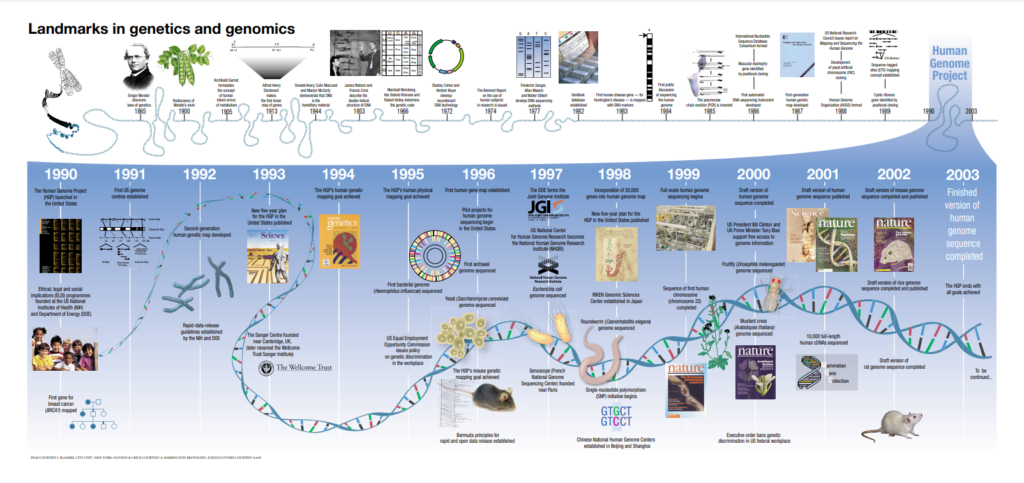
- 2001: The first draft of the Human Genome Project is published.
- 2003: Grigori Perelman presents proof of the Poincaré Conjecture.
- 2004: Andre Geim and Konstantin Novoselov isolated graphene, a monolayer of carbon atoms, and studied its quantum electrical properties.
- 2005: Grid cells in the brain are discovered by Edvard Moser and May-Britt Moser.
- 2010: The first self-replicating, synthetic bacterial cells are constructed.
- 2010: The Neanderthal Genome Project presented preliminary genetic evidence that interbreeding did likely take place and that a small but significant portion of Neanderthal admixture is present in modern non-African populations.[citation needed]
- 2012: Higgs boson is discovered at CERN (confirmed to 99.999% certainty)
- 2012: Photonic molecules are discovered at MIT
- 2014: Exotic hadrons are discovered at the LHCb
- 2014: Photonic metamaterials are discovered to make passive daytime radiative cooling possible by Raman et al.[126][127]
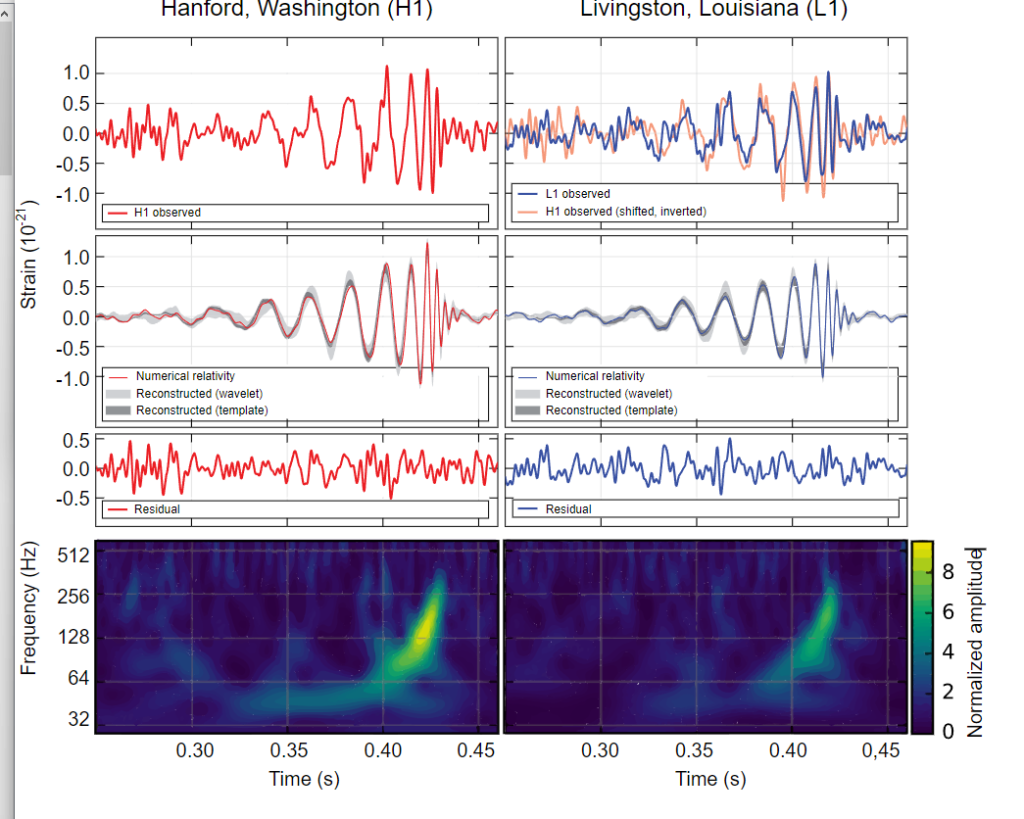
- 2016: The LIGO team detects gravitational waves from a black hole merger
- 2017: Gravitational wave signal GW170817 is observed by the LIGO/Virgo collaboration. This is the first instance of a gravitational wave event observed to have a simultaneous electromagnetic signal when space telescopes like Hubble observed lights coming from the event, thereby marking a significant breakthrough for multi-messenger astronomy.
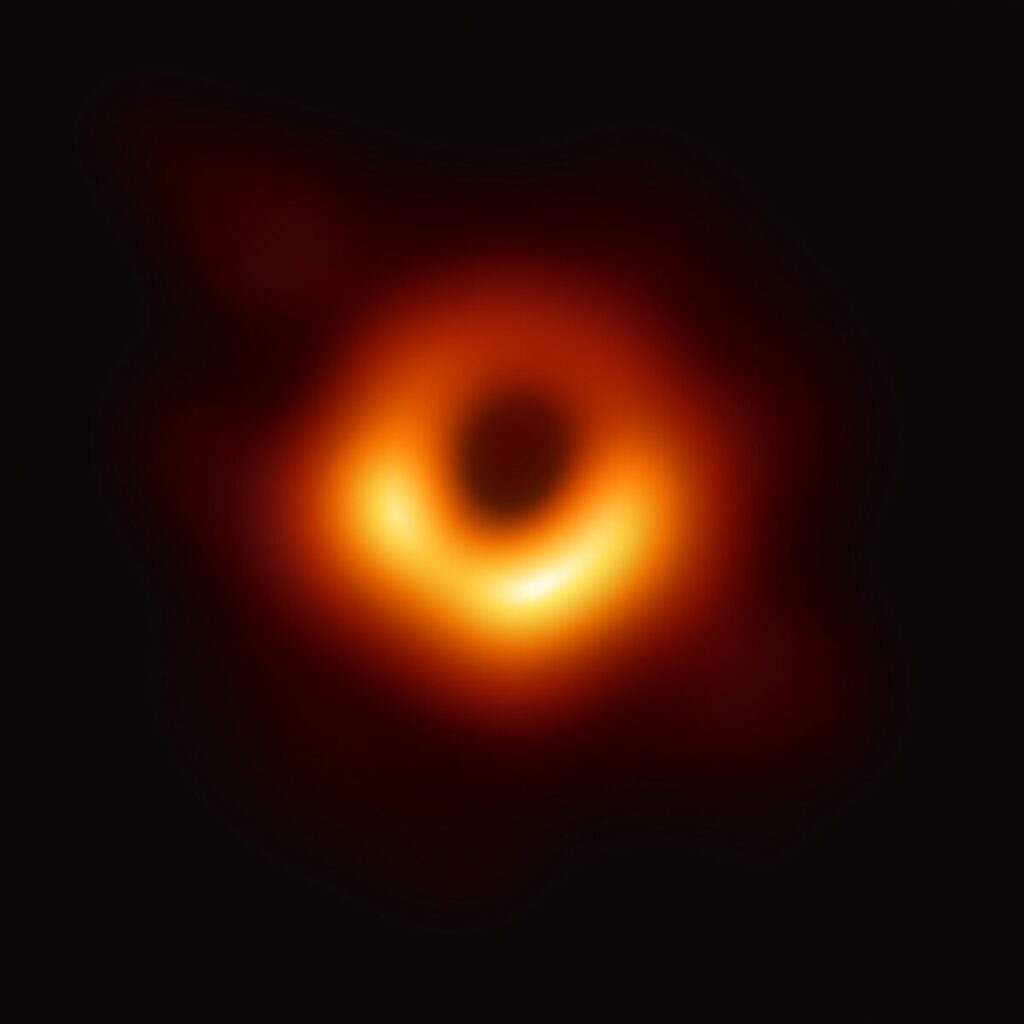
- 2019: The first image of a black hole is captured, using eight different telescopes taking simultaneous pictures, timed with extremely precise atomic clocks.
- 2020: NASA and SOFIA (Stratospheric Observatory for Infrared Astronomy) discover about 12 US fl oz (350 ml) of surface water in one of the Moon’s largest visible craters.
That’s a lot of change!
The human genome has been mapped!
Water’s been discovered on the Moon!
We have actual images of a black hole!
The direct observation of gravitational waves, confirming Einstein’s theory!
Okay, great – what’s your point?
My point is “following ‘the Science ™’ changes, over time“. Our understanding of the universe, changes, over time. Theories are proven, disproven, refined – over time.
And I don’t know about you… but some of these discoveries were news to me. I try to keep up with the latest scientific discoveries, but it is difficult enough keeping up with the latest breaking discoveries in my field, let alone keeping up with them in every field(!).
How about… a GCSE-style qualification, for every decade landmark? A ‘General Studies’ of the sciences, to help busy, working people keep ‘up to date’ with the latest facts? A “General Education 2020” award, to show that you are informed on the latest discoveries? An updated syllabus every decade, to allow for retaking in 2030, 2040, 2050? An affordable way of keeping abreast with the latest theories, as we understand them?
I’m just spit-balling here, but it’s an idea.
Welcome thoughts, as always.
Licensing of media
Gravitational waves
B. P. Abbott et al. (LIGO Scientific Collaboration and Virgo Collaboration), http://physics.aps.org/featured-article-pdf/10.1103/PhysRevLett.116.061102
This file is licensed under the Creative Commons Attribution 3.0 Unported license.
Black hole
Unless specifically noted, the images, videos, and music distributed on the public ESO website, along with the texts of press releases, announcements, pictures of the week, blog posts and captions, are licensed under a Creative Commons Attribution 4.0 International License, and may on a non-exclusive basis be reproduced without fee provided the credit is clear and visible.